
Dark roof sheathing
Black or grey spotting across plywood or boards may indicate repeated high moisture or condensation.
 IICRC Certified
 VRCA Certificate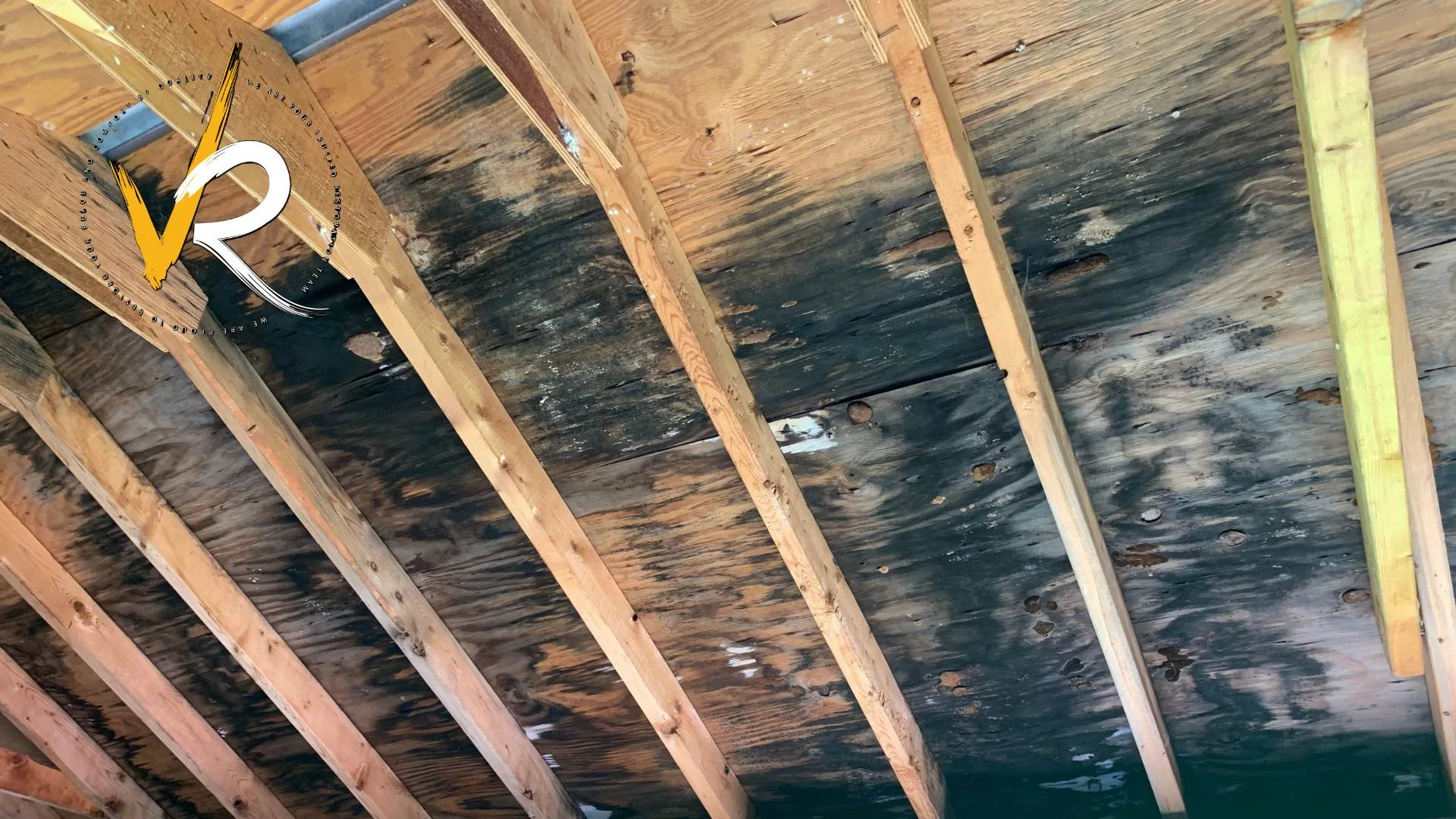
Roof space assessment • West Vancouver
Investigate dark staining, condensation and moisture on attic sheathing before planning cleaning or roof space repairs.
Follow the moisture pattern
Attic mold is often linked to moisture moving from the home into the roof space, exterior water entry or a combination of both. Warm indoor air can carry moisture through ceiling penetrations, attic hatches, bathroom exhaust ducts and gaps around fixtures. When it reaches cold roof sheathing, condensation may form.
Roof leaks create different patterns, often near valleys, flashing, penetrations or damaged roofing. In West Vancouver, heavy seasonal rain and shaded roof areas make it important to distinguish liquid water entry from indoor humidity and air leakage.
An attic mold inspection should document the location and extent of visible growth, the condition of the sheathing and insulation, ventilation pathways and likely sources. Cleaning alone will not prevent recurrence if the moisture pathway remains.
Attic warning signs
Attic issues may remain unnoticed until a roof inspection, renovation or sale. Some staining is old; other patterns indicate active seasonal moisture.
A careful assessment helps prioritize the source correction, remediation and any damaged building material.
Black or grey spotting across plywood or boards may indicate repeated high moisture or condensation.
Corrosion or frost on fasteners can be a clue that humid air is condensing in the roof space.
Moisture reduces insulation performance and can point toward leaks or condensation above.
Insulation, debris or construction details may restrict airflow at soffits or roof vents.
Bathroom or kitchen exhaust terminating in the attic can introduce large amounts of moisture.
Staining near penetrations, valleys or flashing may indicate exterior water entry.
A clear local process
Safe access and a whole system view are important. The roof exterior, indoor moisture sources and attic conditions may all contribute to the same pattern.
Discuss roof age, leak events, indoor humidity, renovations and when the staining was discovered.
Document sheathing, framing, insulation, penetrations, ducts and ventilation where safely accessible.
Consider whether the distribution is consistent with condensation, air leakage or localized roof entry.
Outline source repairs, remediation considerations and any need for roofing, insulation or ventilation specialists.
Fix the cause first
Treating visible growth without managing air leakage, exhaust routing, roof defects or ventilation can allow the same conditions to return. The order of work matters: understand the source, plan safe remediation and coordinate building repairs.
The remediation method depends on the material condition, affected area and accessibility. Severely deteriorated sheathing may require repair, while sound wood may be addressed with an appropriate cleaning plan after moisture control.
West Vancouver coverage
West Vancouver roof designs range from older low slope assemblies to complex modern rooflines. Tree cover, ocean exposure, snow at higher elevations and long wet seasons can influence how roofs dry.
We inspect accessible attic conditions in West Vancouver neighbourhoods and explain how the observed moisture pattern relates to practical next steps.
Questions from property owners
Not necessarily. Roof leaks are one cause, but condensation from indoor air leakage, disconnected exhaust ducts and high humidity can produce widespread attic growth.
The attic and living space are separated by the ceiling assembly, but air pathways may exist. The condition of the air barrier, penetrations and HVAC system should be considered.
Ventilation changes should follow an assessment. More vent openings do not correct every problem, especially when indoor moisture is entering through ceiling leaks.
Some sound wood can be cleaned using an appropriate remediation method. Damaged or deteriorated materials may require repair or replacement.
An attic can be inspected year round when safe access is available. Seasonal conditions may make condensation, frost or active leaks easier to identify.
West Vancouver mold help
Call to explain what you have noticed, or use the request form and include the location of the concern.